Starting a food truck is one of the most accessible ways into the food industry. You can test an idea without a restaurant lease, take your food to your customers, and build a brand at markets, festivals, weddings and corporate events. But it is not as simple as buying a van and firing up the grill. There are rules to follow, costs to plan for and decisions that are expensive to undo.
This guide walks you through how to start a food truck business in the UK, from your first idea to your first booking. It covers realistic start-up costs, the legal steps, and notes for Northern Ireland, where street trading is licensed by your local council.
Before you spend anything: test the idea
The cheapest mistake is the one you make before you buy a vehicle. Spend a weekend at a local food market or event and talk to the traders. Ask what sells, what does not, how many hours they work and what they wish they had known. Most will give you a straight answer.
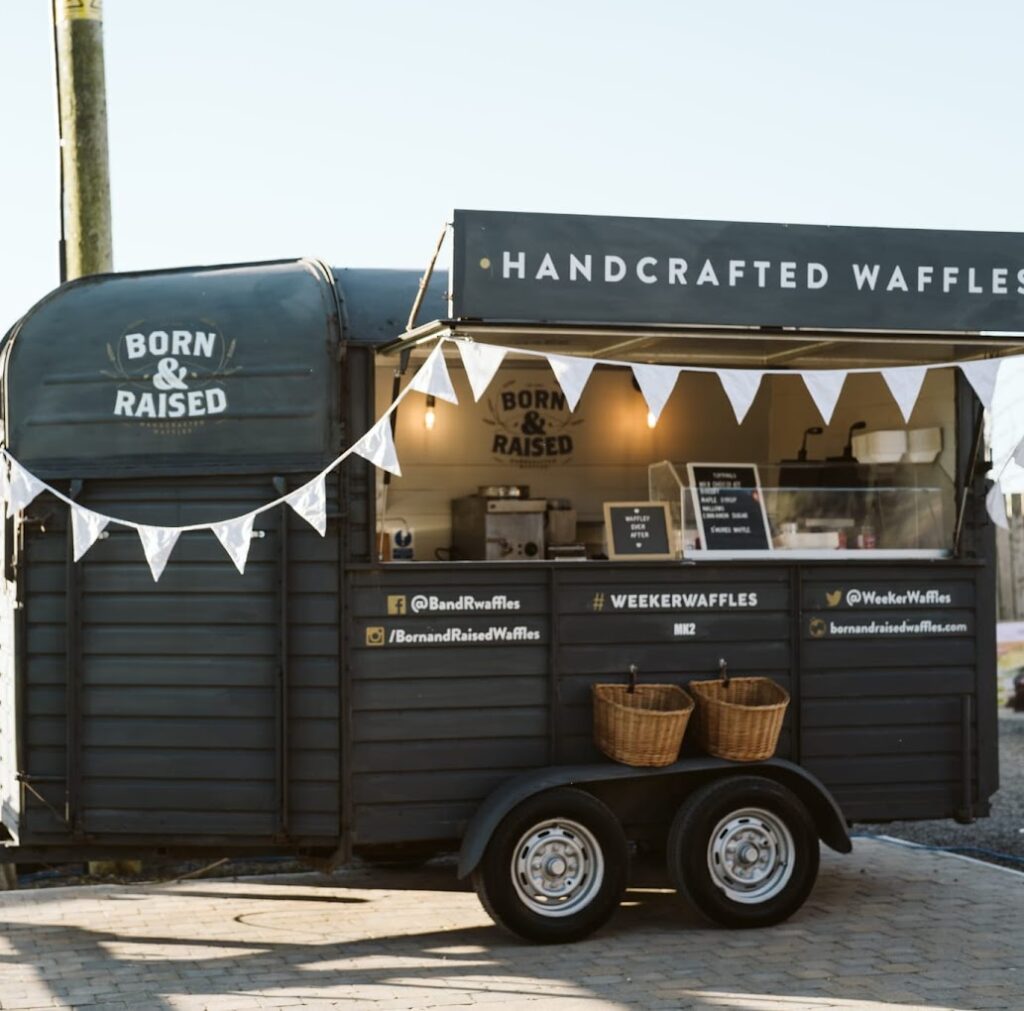
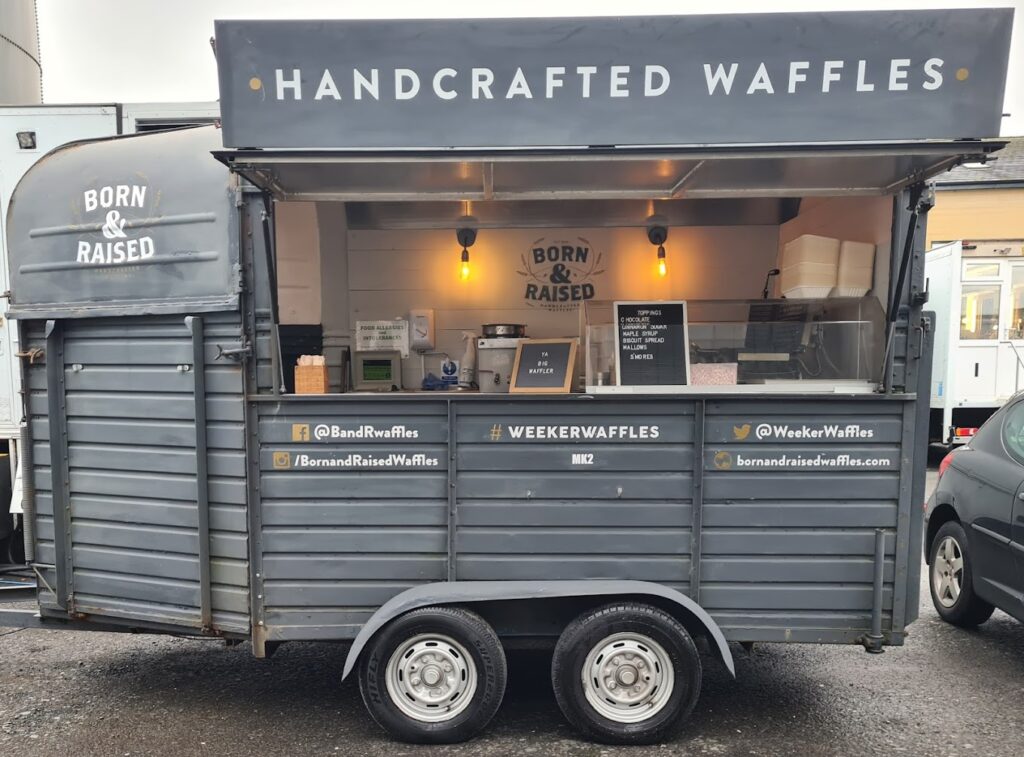
It also helps to read honest accounts from people who have done it. Our post on the reality of expectations when starting a food truck business and the story of how Born & Raised Waffles was built are good places to start.
Step 1: Decide what you will sell and where you will trade
Your menu and your trading plan shape everything else, from the size of your vehicle to your running costs. Ask yourself:
- Can I make this food quickly, consistently and safely from a small kitchen?
- Will it sell at markets and festivals, at private events, or both?
- Does it work for weddings and corporate bookings, where the real money often is?
- How many items do I really need? A short menu means less waste and faster service.
One practical warning: find out where you can trade before you buy. Some councils restrict mobile trading heavily, and finding a pitch can be harder than finding a trailer. Council guidance in several areas advises traders to research sites first, rather than spending thousands and then discovering there is nowhere to park.
Step 2: Choose your vehicle
There are three broad routes, and each trades money against time.
- Second-hand and self-converted: the lowest-cost route, but it takes time, skill and patience.
- Second-hand and professionally fitted: a middle ground, often with a faster start.
- New and factory-fitted: the highest upfront price, but you are trading sooner and the unit usually arrives built to the right standards.
Trailers, vans and converted horseboxes all work. Many owners start small, learn what customers want, then upgrade once demand is proven.
How much does it cost to start a food truck business in the UK?
Published UK guides commonly put the total start-up cost between about £5,000 and £50,000, depending on the vehicle, the fit-out and how ambitious your setup is. Premium builds can cost a good deal more. Here is how the main costs tend to break down.
- The vehicle or trailer: second-hand options start from around £1,000 for a simple setup, while new factory-fitted trucks are often quoted from £30,000 to £50,000 or more.
- Conversion and kitchen fit-out: a professional street food conversion is often quoted at around £20,000 to £30,000 on top of the vehicle, depending on spec.
- Insurance: public liability cover is commonly quoted at roughly £200 to £1,000 a year, depending on your cover and activities.
- Licences and permits: street trading fees vary widely by council, from around £100 to well over £1,000 a year in some areas.
- Stock: food costs often run at around 30 to 35 per cent of your food sales.
- Running costs: fuel, gas, repairs, servicing, card fees, pitch fees and your own time. Fuel alone is sometimes estimated at £100 to £300 a month.
- Branding and marketing: signage, packaging, photography, a website and social media.
These are guide figures from UK sources, not quotes. Always get written prices for your own setup, and keep a cash cushion for the first few months. Set-up often takes two to four months from the first idea to the first service.
Step 3: Register your food business
Every food business in the UK must be registered with its local council, and that includes mobile units such as vans, trailers and stalls. The key points:
- Registration is free.
- You must register at least 28 days before you start trading.
- For a mobile unit, you register with the council where the vehicle is normally kept, such as the address where it is stored overnight.
- You can usually register online through the GOV.UK food business registration service.
Trading without registering can lead to enforcement action, so do not leave this until the last minute.
Step 4: Street trading licences and pitches
Registering your food business is not the same as having permission to trade on a particular street or pitch. You may need a separate street trading licence or consent, and rules differ between councils.
In Northern Ireland, street trading is licensed by your local district council under the Street Trading Act (Northern Ireland) 2001. Belfast City Council, for example, asks mobile traders for evidence of food business registration and an MOT certificate for the vehicle, and says to allow at least 28 days to process an application. Fees and conditions differ between councils, so check with the one covering your area.
Trading at private events such as weddings is usually arranged with the venue or organiser, but always check with your council what applies to you. For markets and festivals, ask the organiser what paperwork they need from you.
Step 5: Food safety, hygiene and allergens
This is the part you cannot cut corners on. As a minimum:
- Have a documented food safety management system. Councils point to tools such as Safe Catering or Safer Food Better Business, which help you identify hazards and put controls in place.
- Complete food hygiene training before you open, so you and any staff understand safe handling, storage, cleaning and temperature control.
- Protect food from cross-contamination and keep it covered and stored correctly.
- Know your allergens. You must be able to tell customers about the major allergens in the food you sell.
Once you are trading, your council will arrange an inspection and you will receive a food hygiene rating. A good rating is a real selling point when you are pitching for weddings and corporate events.
Step 6: Insurance and safety certificates
Event organisers and customers will often ask to see your paperwork before they book. Plan for:
- Public liability insurance, which most events and venues require.
- Employer’s liability insurance, if you take on staff.
- Vehicle insurance, MOT and road tax, where they apply to your vehicle.
- Gas and electrical safety checks. Councils may ask for gas safety certification for your equipment, so keep it up to date.
Step 7: Set up the business side
Many food truck owners begin as sole traders because it is simple, then move to a limited company as they grow. Whichever you choose, register with HMRC, open a separate business bank account and keep clear records from the first day. Look into VAT once your turnover gets near the threshold, and speak to an accountant if you are unsure.
Step 8: Price for profit, not just for sales
It is easy to be busy and still make no money. Work out the true cost of every item on your menu, including packaging, gas and wastage, then price with your margin in mind. If food costs run at around a third of your sales, the rest has to cover pitch fees, fuel, insurance, repairs, wages and profit.
Base your prices on how many portions you can realistically serve in a busy hour, not on how many you hope to sell. Slow service loses customers and caps your income.
Step 9: Get found and get booked
Great food is not enough if nobody knows you exist. A few things make a real difference:
- A simple website with your menu, photos, areas covered and a clear way to enquire. If you need help, take a look at our food truck website design service.
- A Google Business Profile, so people searching locally can find you.
- A directory listing where customers already search for trucks. You can list your business with us, and customers can browse the food truck directory.
- Reviews and photos, which build trust before anyone has tasted your food.
- Private bookings. Weddings, corporate days and parties are often more predictable and more profitable than relying on walk-up trade. Our post on why your food truck is not getting more private bookings explains what usually holds trucks back.
Common mistakes to avoid
- Buying the vehicle before checking where you can legally trade.
- Underestimating conversion costs and how long they take.
- Running a menu that is too big for a small kitchen.
- Forgetting running costs such as repairs, gas and insurance.
- Relying on one market or one event for all your income.
- Ignoring marketing until the truck is built.
How to start a food truck business: frequently asked questions
How much does it cost to start a food truck business in the UK?
Most UK guides put the total at roughly £5,000 to £50,000, depending on whether you buy second-hand or new, convert it yourself or have it professionally fitted, and how much equipment you need. Always budget extra for insurance, licences, stock and running costs.
Do I need a licence to run a food truck?
You must register your food business with your local council, and you may also need a street trading licence or consent to trade on particular streets or pitches. In Northern Ireland, street trading licences come from your local district council.
How long before I can start trading?
You must register at least 28 days before you open, and street trading licences can take at least that long to process in some councils. With sourcing a vehicle and a conversion, many people allow a few months from start to finish.
Do I need food hygiene training?
You must run your business hygienically and have a food safety management system in place. Most traders complete a food hygiene course before they open, and it is the simplest way to show you know what you are doing.
Is it better to buy a new or second-hand food truck?
Second-hand is cheaper and lets you learn before committing, but may need repairs or a refit. New is more expensive but gets you trading sooner. Many owners start with second-hand and upgrade later.
How do I get customers for a new food truck?
Start with markets and local events, build a simple website and Google Business Profile, ask every happy customer for a review, and list your truck in a directory so people searching for event catering can find you.
Final thoughts
Starting a food truck business takes planning, but it is very doable if you take it step by step. Test the idea, check where you can trade, register properly, price for profit and make yourself easy to find and book. Do those things well and you will be ahead of many people who rush into buying a van first.
Ready to get your truck in front of customers? Add your listing to the Born & Raised Collective directory and start getting found.